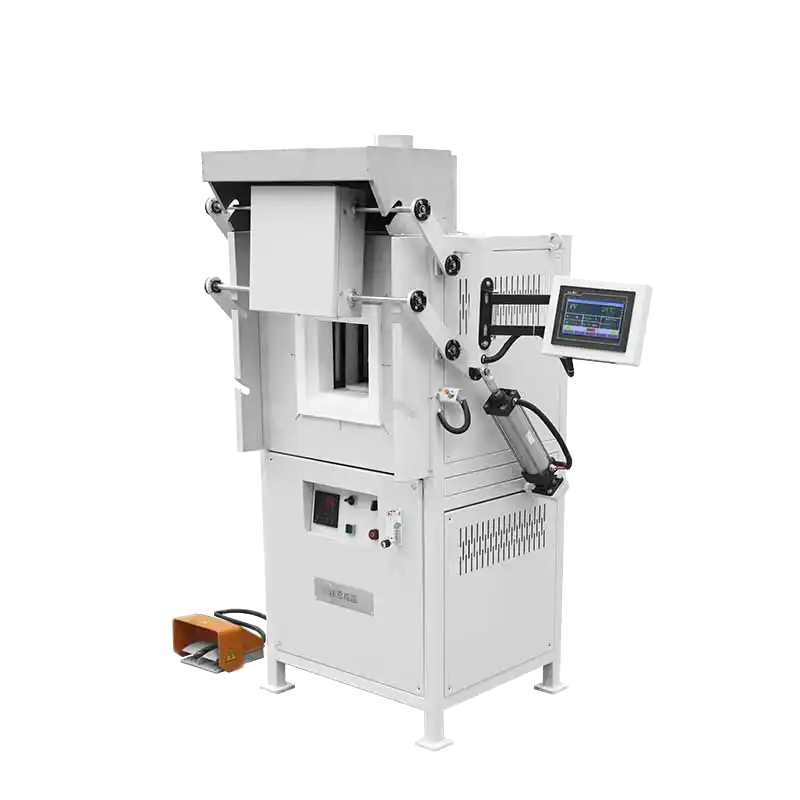
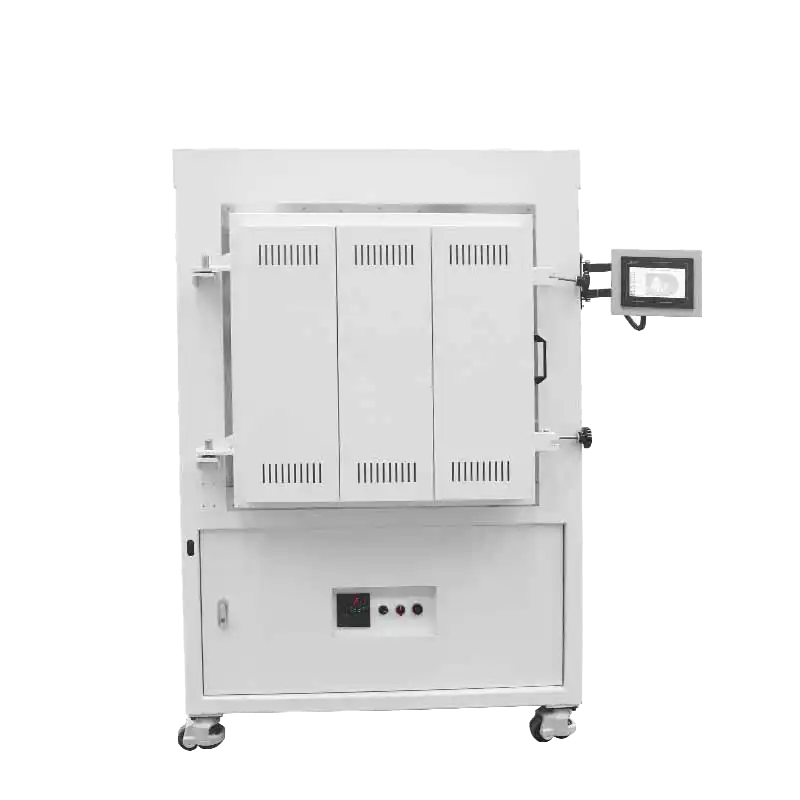
1200℃ Integrated High-temperature Furnace, Adjustable Heating Rate of 0.1-40℃/min, Three-layer Insulation with Over 80% Energy Saving, Dual-circuit Protection + RS485 Remote Control, 30/50-segment Program Temperature Control Supporting Curve Storage and Modification, Suitable for High-temperature Processing Requirements in Ceramics, Metallurgy and Other Fields.
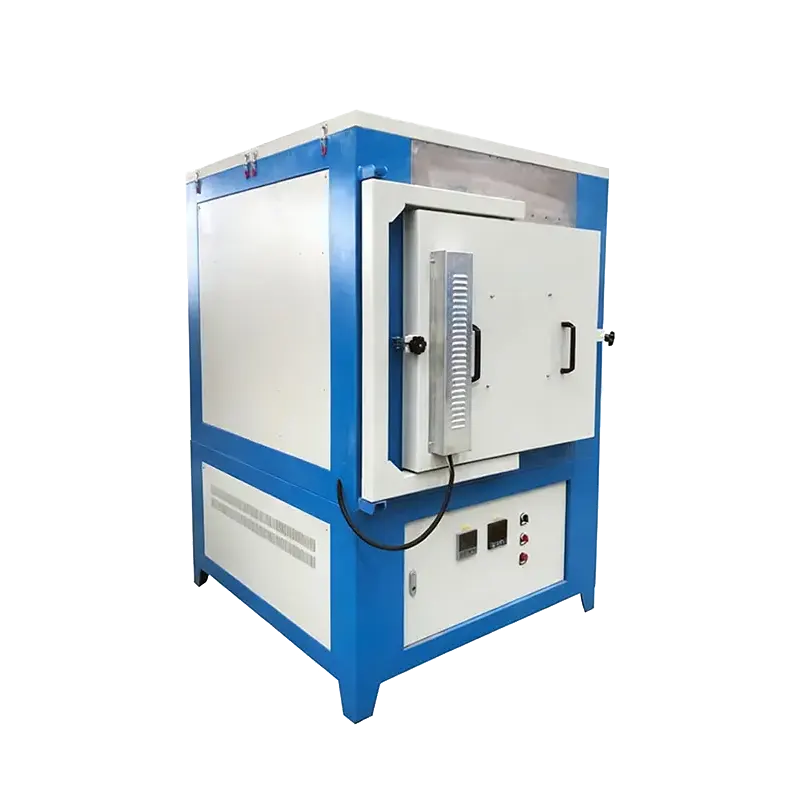
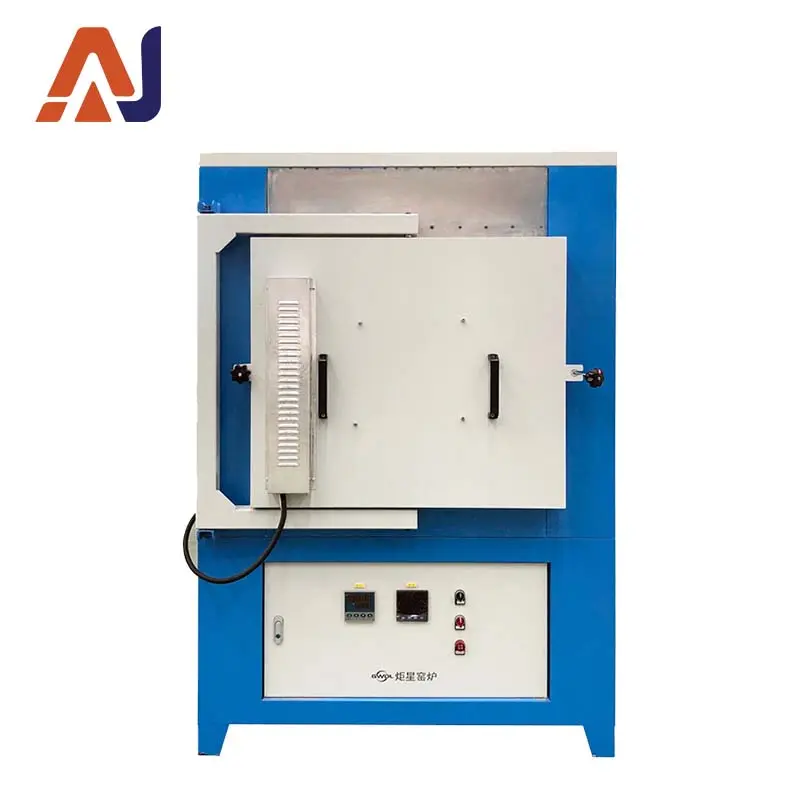
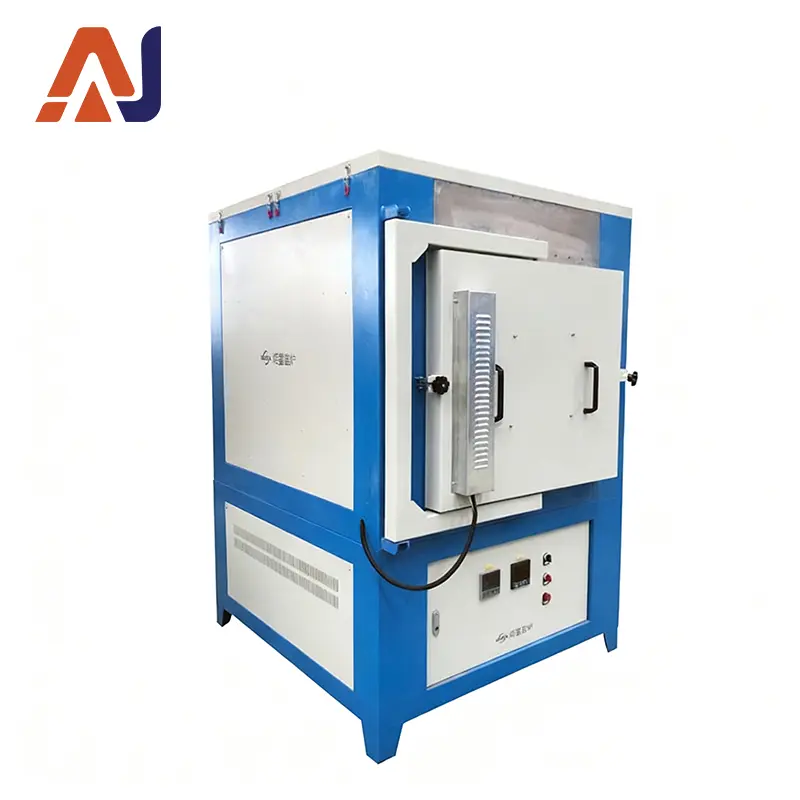
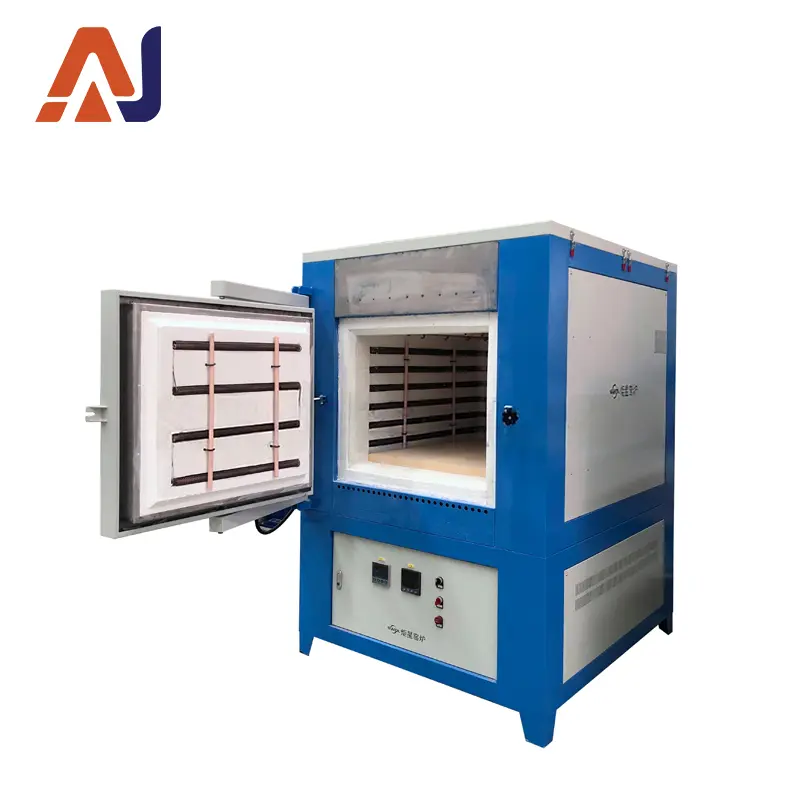
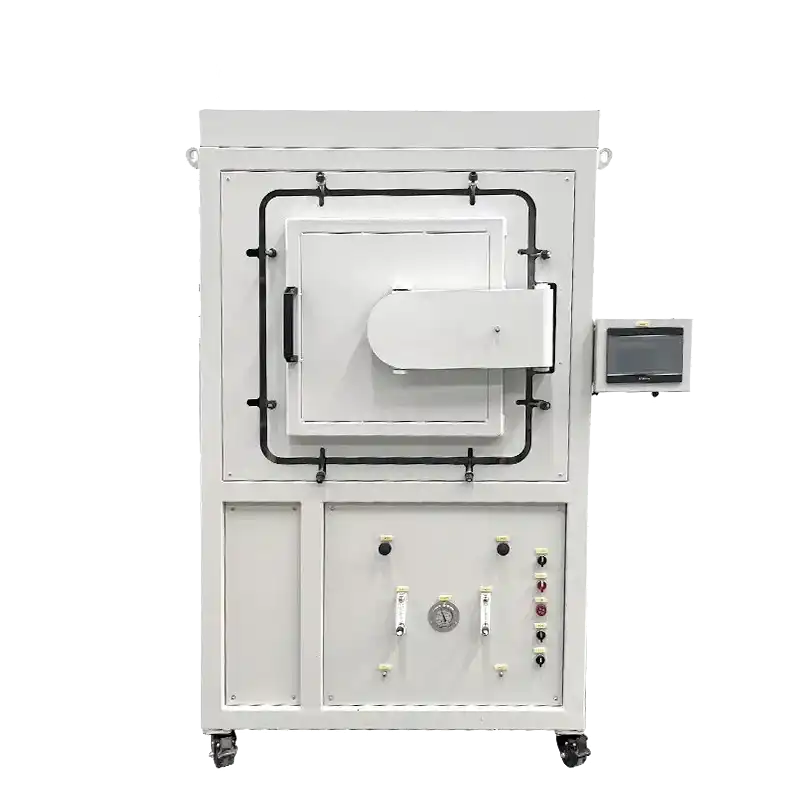
It integrates the control system and furnace chamber into one. The furnace lining is made of vacuum-formed high-purity alumina lightweight aggregate material.
It adopts high-temperature alloy resistance wire (containing molybdenum, the surface temperature of the heating wire can reach 1400℃) or silicon carbide rod as the heating element. It is a special equipment specially developed for laboratories of colleges and universities, scientific research institutes, and industrial and mining enterprises to conduct sintering, melting, analysis and production of ceramics, metallurgy, electronics, glass, chemical industry, machinery, refractory materials, new material development, special materials, building materials, metals, non-metals and other chemical materials.
The control panel is equipped with an intelligent temperature controller, control power switch, main heating start/stop button, voltage and current meters, and a computer interface for real-time monitoring of the system's working status. This product adopts reliable integrated circuits, featuring a good working environment and strong anti-interference performance. The temperature of the furnace shell is ≤45℃ at the maximum operating temperature, which greatly improves the working environment. With microcomputer program control and programmable temperature curves, it realizes fully automatic heating/cooling. The temperature control parameters and programs can be modified during operation, which is flexible, convenient and easy to operate.
Temperature control accuracy: ±1℃ without overshoot. Constant temperature accuracy: ±1℃. It has a fast heating rate, with the maximum heating rate ≤45℃/min.
The furnace chamber is entirely made of vacuum-formed high-purity alumina lightweight aggregate material, which has high service temperature, low heat storage capacity, excellent thermal shock resistance without cracking or slag falling, and good thermal insulation performance (the energy-saving effect is more than 60% higher than that of traditional electric furnaces). With a reasonable structure and double-layer furnace shell with air cooling for heat dissipation, it can greatly shorten the test cycle.
| Category | 1200℃ |
| Maximum Operating Temperature | 1250℃ |
| Long-term Operating Temperature | 1200℃ |
| Temperature Control Range | 80-1200℃ |
| Temperature Measuring Element | Type K Thermocouple, measuring range: 0-1320℃ |
| Heating Element Installation Position | Both sides + Top & Bottom + Furnace Door |
| Temperature Control Precision | ±1℃ (Integrated circuit control, no overshoot) |
| Furnace Temperature Uniformity | ±1℃ (Varies by furnace chamber size; multi-point control available for large furnaces to improve temperature uniformity) |
| Heating Rate | Freely adjustable range: Maximum 40℃/min, Minimum 1℃/h |
| Heating Elements | Option 1: High-temperature alloy resistance wire (molybdenum-containing, surface temperature up to 1400℃); |
| Option 2: U-shaped equal-diameter silicon carbide rods, non-metallic high-temperature heating elements made of high-purity α-SiC. Features: fast heating, high thermal efficiency, long service life, no deformation at high temperature, easy installation & maintenance, maximum temperature up to 1500℃. | |
| Furnace Body | Processed by CNC machine tools, undergoing polishing, grinding, pickling, phosphating, plastic powder spraying, high-temperature baking and other processes. Dual-color design with novel appearance, featuring oxidation resistance, acid & alkali resistance, corrosion resistance, high-temperature resistance and easy cleaning. |
| Furnace Structure | Air-cooled double-layer furnace structure. Air-cooled guide partitions realize overall cold air circulation of the furnace shell, cooling the heating element conductive sheets before exhausting, avoiding high-temperature oxidation of conductive sheets and ensuring a good working environment. |
| Furnace Door Opening Mode | Axial 180° side opening, the furnace door can rotate 360° to prevent scalding the arm by the inner wall during high-temperature material taking. Equipped with stainless steel spring lock under the door for effective locking; the spring elasticity absorbs the expansion of refractory materials, ensuring free expansion/contraction and reliable sealing. |
| Refractory Material | Furnace lining made of vacuum-formed high-purity lightweight alumina material; collision-prone and load-bearing positions (furnace mouth, furnace bottom) adopt lightweight hollow sphere alumina board. Features: high operating temperature, low heat storage, resistance to rapid heating/cooling, no cracking, no slag falling, excellent thermal insulation (energy-saving effect increased by more than 80% compared with traditional electric furnaces). |
| Insulation Materials | Three-layer insulation structure: Aluminosilicate fiber board, alumina fiber board, polycrystalline alumina fiber board; energy-saving effect increased by more than 80% compared with traditional electric furnaces. |
| Furnace Body Surface Temperature | <45℃ during long-term continuous operation |
| Safety Protection | Adopts an integrated module control unit with high precision, designed with dual-loop control and dual-loop protection. It provides protection against overshoot, undershoot, thermocouple break, phase loss, overvoltage, overcurrent, overtemperature, current feedback, soft start, etc. |
| Temperature Control System | Uses closed-loop thyristor module trigger control, supporting phase-shift trigger/zero-crossing trigger modes. Output voltage, current or power is continuously adjustable with constant voltage, constant current and constant power characteristics. The current loop is the inner loop and the voltage loop is the outer loop; when load is suddenly applied or load current exceeds the limit, the regulator output current is restricted within the rated range to ensure stable operation. The voltage loop adjusts synchronously to maintain constant current and voltage with sufficient margin, protecting heating elements from excessive current/voltage impact and ensuring control precision and safety. |
| Display Parameters | Real-time temperature, temperature segment number, segment time, remaining time, output power percentage, voltage, current, etc. |
| Buttons | High-quality buttons with service life exceeding 100,000 times, equipped with LED indicators. |
| Temperature Curve Setting | Uses an intelligent temperature controller supporting multiple regulation modes (standard PID, APID, MPT), with self-tuning and self-learning functions, no overshoot or undershoot. Equipped with 30-segment program control (50-segment customizable), enabling heating/cooling control at any slope, supporting programmable commands such as jump (cycle), run, pause, stop; parameter modification is allowed during operation. Equipped with curve fitting intelligent adjustment algorithm to achieve smooth temperature control curve. |
| Multiple Curve Input | 30-segment program control (50-segment customizable), configurable as: 1 curve with 30 (50) segments, 2 curves with 14 (28) segments each, 3 curves with 9 (15) segments each, 5 curves with 5 (9) segments each; multiple curves can be input simultaneously and called arbitrarily during use. |
| Communication Interface | Equipped with RS485 communication interface with a maximum distance of 1200 meters; supports computer-controlled operations including furnace start, pause, stop, heating curve setting/reading, parameter setting, etc., with high reliability and easy operation. The computer interface displays rich content including measured value, set value, output value, segment time, segment number, heating curve, power percentage curve. Supports heating curve storage, calling and parameter modification; historical curves and reports support adjustable recording intervals (1s-1h) and long-term storage. |




.webp)